Table Of Content

Theradome is one of the best of these FDA-cleared at-home laser therapy devices to reverse thinning hair and hair loss. Although reducing your stress levels might seem insurmountable, making sure you’re eating the right things will go a long way to setting a good foundation for optimum hair growth. A healthy balanced diet is also important in stress reduction too as it can support a healthy immune system, repair damaged cells and even reduce elevated cortisol levels. Getting enough protein in your diet is essential as it provides the building blocks for proper hair growth; meat, tofu, eggs, beans, grains, nuts, and fish are all good protein sources. Some studies suggest that telogen effluvium can also be connected to low levels of iron, so include iron-rich foods like leafy vegetables, lentils and liver where you can.
Following a Mediterranean diet
If you’re experiencing rapid hair loss and want to remedy the situation, there are several ways to encourage new hair growth or make your hair strands stronger and healthier. If you have healthy hair on the back or side of your head, a doctor can surgically remove hair strands from those areas and graft them into your scalp in a bare area. It’s another expensive treatment that isn’t generally covered by insurance, but it tends to be a long-lasting solution.
Frontal fibrosing alopecia

Minimize the use of high-heat styling tools, hair extensions and harsh treatments like perms. Avoid hairstyles like tight buns and braids that pull on your scalp, potentially causing traction alopecia. Dozens of over-the-counter supplements and products purport to reverse hair loss, making it tough for patients to know which ones work and which don’t. Poisons that can cause hair loss include arsenic, thallium, mercury, and lithium. If you ingest a large amount of warfarin, which is found in rat poisons, it can also cause hair loss.
It's possible to keep hair loss from progressing, thanks to a number of noninvasive treatments.
Rosemary oil and hair growth: Research, effectiveness, and tips - Medical News Today
Rosemary oil and hair growth: Research, effectiveness, and tips.
Posted: Wed, 15 Nov 2023 08:00:00 GMT [source]
Prescription medications, like finasteride (Propecia), may help prevent further androgenetic hair loss, especially for male pattern baldness. You take this medication daily to slow hair loss, though some experience new hair growth when taking finasteride. Female pattern baldness can affect anyone assigned female at birth. However, you’re more likely to have female pattern baldness if you have a family history of hair loss or after menopause.
Female-pattern baldness
But in some men, these cells are progressively killed off by dihydrotestosterone, the hormone that causes the male body to mature during puberty. One thing is for sure — anyone can experience hair loss, and it’s usually determined by a number of different factors. According to Dr. Yasmin Akhunji, thyroid doctor and endocrinologist at Paloma Health, some of the most common reasons for hair loss in women tend to be thyroid dysfunction and menopause.
Other hair loss may be more permanent or may not stop until an underlying condition is treated. Some research, including a 2024 review, suggests that there may be a connection between vitamin D deficiency and alopecia. Although more research is needed, it’s possible that treating this deficiency could help with hair regrowth. The best way to slow or stop hair loss is to find and address the underlying cause. Hair loss stemming from factors such as childbirth, surgery, and stress can be temporary in some cases — a condition called telogen effluvium.
Can stress cause hair loss?
The most common products contain an ingredient called minoxidil. Because so many things can cause hair loss, it’s best to schedule an appointment with a medical professional if you notice any changes in your hair. This usually happens because of radiation treatment or chemotherapy. It’s also the most common cause of hair loss, affecting up to 50% of people.
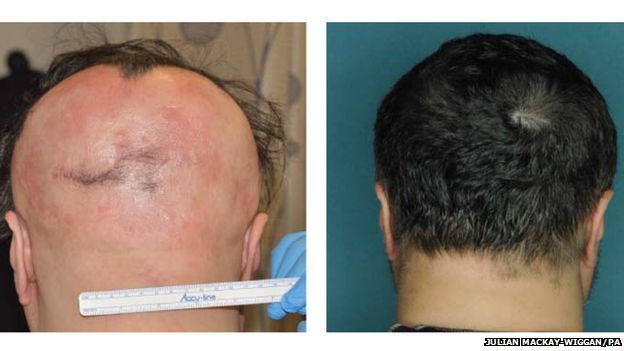
Family history (something you can’t change) is one of the most common causes of age-related hair loss and male-pattern baldness. However, taking care of your general health and sticking to a healthy hair care routine can help you avoid making your condition worse. And it can help to use the strategies above as early as possible when you start noticing your hair thinning. Studies show that minoxidil and finasteride work better together for certain types of hair loss than using either one alone (Chen, 2020).
Can hair grow back after balding naturally?
People can develop hair loss where boots, socks, or tight clothing frequently rubs against their skin. Left untreated, a sexually transmitted infection (STI) can lead to hair loss. Left untreated, syphilis can cause patchy hair loss on the scalp, eyebrows, beard, and elsewhere. Many people who have plaque psoriasis develop psoriasis on their scalp at some point.
By contrast, scarring alopecia, another autoimmune disease that causes hair loss, is often accompanied by itchiness, tenderness and scaling of the scalp. Scarring alopecia is the most devastating type of hair loss, Mirmirani says, because it permanently destroys the hair follicles. Minoxidil is commonly used to treat both male- and female-pattern baldness. However, the recommended strengths and application methods may differ among the genders based on the severity of hair loss and other individual factors. However, it is known that androgenetic alopecia is linked to hormones called androgens, especially dihydrotestosterone (DHT).
Dermatologists can offer medication to help hair grow back more quickly. Male- and female-pattern baldness is often inherited from one or both parents. Although researchers believe that multiple genes may contribute to androgenetic alopecia, scientific studies have confirmed that variations in a single gene, known as AR, play a role. DHT is widely believed to be the leading cause of male- and female-pattern baldness, as it can cause hair follicles to shrink and produce thinner, shorter hairs.
Hair loss can be attributed to various factors, including genetics, hormonal changes, medical conditions, medications, and lifestyle choices. Kemp, now in his 60s, was dismayed at the discovery, but it also marked the beginning of a lifelong professional interest in the science of hair loss and how to stop it. You can change how you care for your hair, which can prevent hair loss. Once you damage a hair follicle, hair cannot grow from that follicle. Having many damaged hair follicles creates permanent bald spots. Many of the hair loss treatments mentioned above are also used for male-pattern baldness.